
Licensed General Contractor · Licensed New Home Builder in MD · 20+ Years DC, Maryland & Virginia Construction Experience
There is a particular kind of real estate listing in the DC suburbs that tells a very specific story. You'll recognize it immediately:
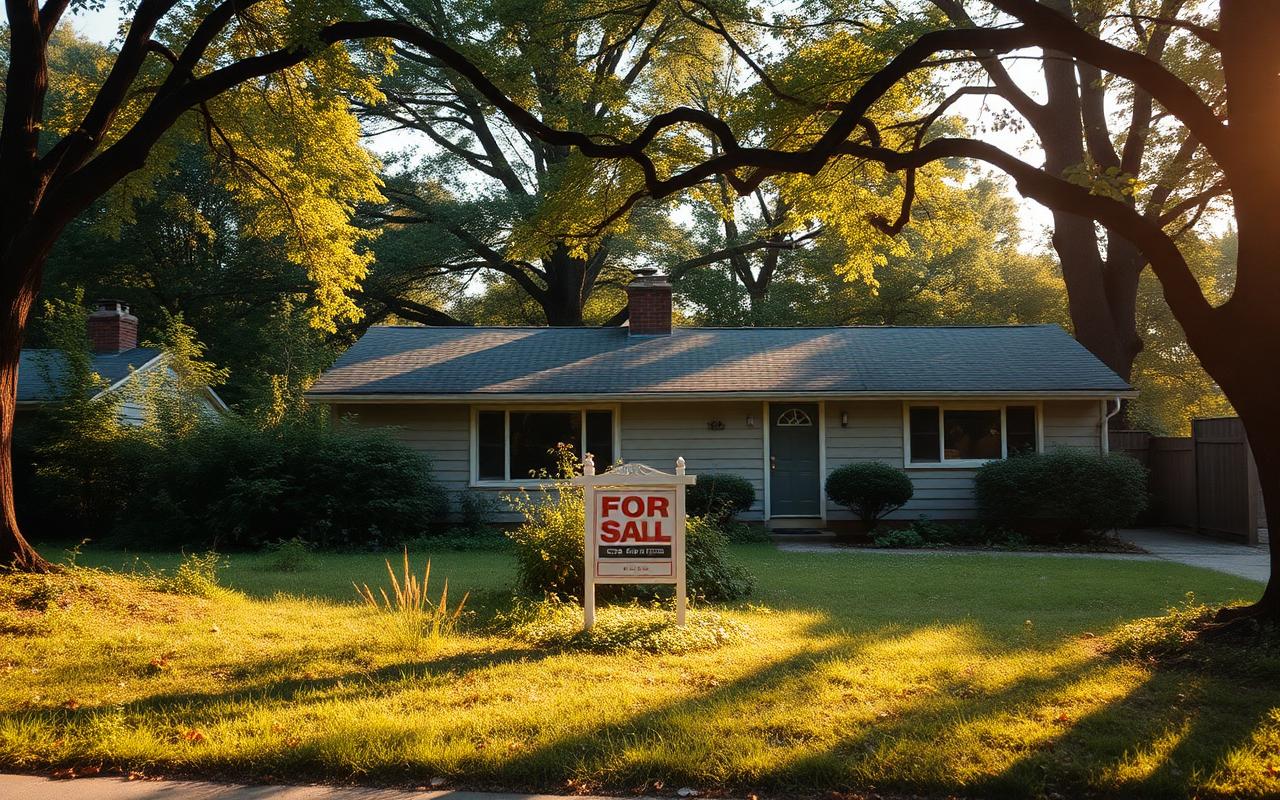
Four bedrooms. Two and a half baths. Built in 1957. "Charmingly original kitchen." One photo of the exterior that was clearly taken on the sunniest day in the history of the neighborhood. Listed at $925,000.
And in the agent remarks — the part only other agents can see — five words that tell you everything: "Value is in the land."
Translation: This house is a corpse. You're buying the dirt underneath it.
Welcome to the teardown market in the DC suburbs, where a 67-year-old split-level on a quarter acre is the most expensive demolition project you'll ever love. Where the path to your dream home begins not with an architect's rendering, but with a wrecking crew and a dumpster the size of a school bus. And where first-time teardown buyers routinely leave $50,000 to $200,000 on the table because nobody explained the rules before they started playing. Whether you're searching for a teardown lot in Bethesda, eyeing Potomac, considering McLean, or exploring Arlington — this is the guide you need before you buy a teardown lot in the DC suburbs and try to build a custom home on a teardown lot.
This is the guide I wish every teardown buyer read before making an offer. After years in this market, I've watched too many families learn these lessons the expensive way.
Why Teardowns Exist (And Why You Can't Just "Find a Lot")
If you're new to the DC suburbs housing market, your first instinct might be: "I want to build a custom home. Let me find an empty lot."
That's adorable. Also impossible.
Bethesda, Potomac, Chevy Chase, McLean, and Arlington were largely built out between the 1940s and 1970s. Every buildable lot has a house on it. There are no empty parcels waiting for your Pinterest board to materialize. The rare exception is a lot that was once someone's side yard and got subdivided — and those sell before they hit the MLS, usually to a builder who's been watching that property like a hawk since 2019.
So if you want a new home near top-rated schools — if you want the location, the neighborhood character, and the community that makes the DC suburbs one of the most desirable residential markets in America — you're buying a teardown.
That means you're buying an existing home (often at full market value for the land), demolishing it, and building new from the ground up. It's the only way to get a brand-new custom home in an established neighborhood. If you're considering acting as your own builder rather than handing the project to a traditional GC, here's how owner-builder consulting works . And once you accept that reality, the question becomes: how do you do it without getting crushed by the math?
The 7 Things to Check Before You Make an Offer
A teardown lot is not just a teardown lot. Two properties on the same street, listed at the same price, can have wildly different build potential. One might be a goldmine. The other might be a $200,000 lesson in reading the fine print.
Here's what to evaluate before you fall in love with a listing:
1. Setbacks and Building Envelope
Local jurisdictions across the DC suburbs have front, side, and rear setback requirements that dictate how close your home can be to the property line. Older homes were often built under different codes — meaning the existing house might sit in places where you can't build a new one. The buildable area (your "building envelope") is sometimes shockingly smaller than the total lot size. A 12,000-square-foot lot can have a building envelope that only supports a 3,200-square-foot footprint. If you're planning a 5,000-square-foot home on three finished levels, that might work. If you're planning a rambling ranch, it won't.
The move: Get a boundary survey and overlay the current setbacks before making an offer. Not after. Before. For the full breakdown of every constraint to evaluate, see our complete guide on how to check the lot's buildability before making an offer . Then calculate the maximum home size for any lot using our zoning and setback guide, or calculate the setbacks and buildable area for any lot using our setback deep-dive.
2. FAR (Floor Area Ratio)
FAR is the ratio of your home's total above-grade floor area to the lot size. Local zoning codes cap this based on your zone. In most residential zones, this determines the maximum square footage you can build. And it's the number that kills more dream floor plans than any architect's opinion.
A 10,000-square-foot lot might allow a maximum of roughly 3,500 square feet above grade. If you're envisioning 5,500 square feet of living space, you're either going underground (hello, finished basement) or you're buying a bigger lot.
The move: Calculate the maximum allowable square footage before you ever talk to an architect. The lot dictates the house, not the other way around.
3. Tree Canopy and Forest Conservation
This is the one that blindsides people. Jurisdictions across the DC suburbs take their trees very, very seriously. If your lot has significant tree canopy — and many teardown lots in Bethesda, Potomac, and McLean do — you may be required to preserve certain trees, replant others, post tree protection bonds, or work around root zones that shrink your building envelope further.
A single large tree in the wrong location can add $40,000 in costs and two months to the timeline. That tree isn't going anywhere, and neither are the county's feelings about it.
The move: Get an arborist report and cross-reference it with the local forest conservation requirements. Do this during due diligence, not after you've closed.
4. Grading, Topography, and Stormwater
A flat lot is a gift from the construction gods. A sloped lot is a gift from the construction gods who were feeling sarcastic that day.
Significant grade changes mean more expensive foundations, retaining walls, regrading, and — critically — stormwater management plans that your local permitting office will review with the enthusiasm of a forensic accountant. Stormwater management alone can cost $20,000 to $60,000 depending on lot conditions. On severe slopes, foundation costs can double.
The move: Walk the lot. Look at it after a heavy rain. Check the local floodplain maps. Then get a civil engineer's opinion before you commit.
5. Utility Connections (Water, Sewer, Gas, Electric)
The existing home has utilities. Your new home might need different utilities — or more of them. If you're significantly increasing the size of the home, you may need to upsize your water service, replace the sewer lateral, or connect to infrastructure that's farther away than you'd expect.
Water and sewer connection fees alone can run $10,000 to $30,000+. And utility companies operate on their own timeline, which is best described as "geological."
The move: Contact your local water/sewer authority early. Understand the existing connections. Budget for upgrades. And add three months to whatever timeline they give you, just to be safe.
6. HOA, Architectural Review, and Historic Overlays
Some DC suburbs neighborhoods have HOAs or architectural review committees that regulate what you can build. The Town of Chevy Chase, for example, has design review requirements. Some neighborhoods in McLean and Arlington restrict modern architecture, exterior materials, or even colors.
Historic overlays are rarer in the teardown-heavy areas, but they exist. If your lot is in a designated historic district, demolition may require additional approvals — or may not be permitted at all.
The move: Research the specific municipality, HOA, and any overlay zones before making an offer. Your real estate agent should know this, but verify independently.
7. School District (Because Let's Be Honest)
Nobody moves to the DC suburbs for the nightlife. They move for the schools. In Bethesda, it's Whitman, Pyle, and Bannockburn. In Potomac, Churchill and Wootton. McLean has Langley and McLean High. Arlington has Yorktown and Washington-Liberty.
School district boundaries are not always intuitive, and they occasionally shift. A lot that's half a mile from one high school might actually feed to a different one. At these price points, the school assignment can swing your home's resale value by $100,000 or more.
The move: Verify the exact school assignment through the official school district boundary tool. Don't trust the listing. Don't trust the agent. Trust the boundary tool.
If you're actively evaluating teardown lots, this is exactly where most buyers make costly mistakes. We routinely help clients analyze lots before they buy — including setbacks, FAR, tree restrictions, and real build costs. Send us a listing and get a lot analysis before you write the offer.
"A teardown lot is a $900,000 bet. The seven checks above are the difference between a bet you win and a bet you survive."
The Financial Math: What a Teardown-to-New-Build Actually Costs in 2026
Let's walk through the complete investment for a typical teardown project in the DC suburbs. Not a budget build. Not a mansion. A well-appointed 4,800-square-foot home with a finished basement, high-quality finishes, and no corners cut.
| Cost Category | Estimated Range |
|---|---|
| Teardown Lot Acquisition | $825,000 – $1,100,000 |
| Demolition & Site Clearing | $25,000 – $50,000 |
| Architectural & Engineering Design | $60,000 – $120,000 |
| Permits & Impact Fees | $30,000 – $60,000 |
| Site Work (grading, stormwater, utilities) | $40,000 – $100,000 |
| Hard Construction Costs | $850,000 – $1,300,000 |
| Landscaping & Hardscaping | $30,000 – $80,000 |
| Contingency (10%) | $90,000 – $150,000 |
| TOTAL ALL-IN INVESTMENT | $1,950,000 – $2,960,000 |
Yes, that's a wide range. It's wide because the variables are enormous: lot price, lot difficulty, home size, finish level, and — critically — whether you're paying full builder markup or using an owner-builder consulting model. The construction line item alone can swing by $150,000–$250,000 based on that single decision.
Which brings us to the part the teardown lot sellers and the luxury builders really don't want in the same blog post:
The Markup Variable: How Your Build Model Changes Everything
On a $1M hard construction cost, a traditional builder at 25% markup adds $250,000. That's not finishes. That's not upgrades. That's the fee for someone else managing the project. (We unpack this in detail in our deep-dive on builder markup in DC suburbs custom homes .)
Through Iron Gate's iBuild consulting model, that $250,000 in markup gets replaced with a consulting fee of $45,000–$75,000 depending on your tier. You keep the difference. Same subcontractors. Same materials. Same inspection standards. Different line item on the balance sheet.
On a $2.5M all-in teardown project, the iBuild approach can reduce total investment by $150,000–$200,000. That's the difference between stretching your budget to get into the neighborhood versus building comfortably with room for the finishes you actually want.
💡 The Teardown Math in One Sentence
Your lot costs what it costs. Demolition costs what it costs. Permits cost what they cost. The only major variable you can actually control is how much of your construction budget goes to building the home vs. paying someone else's profit margin.
Vipin Motwani
Experienced building consultant and Founder, Iron Gate Development